
Last updated November 24, 2026
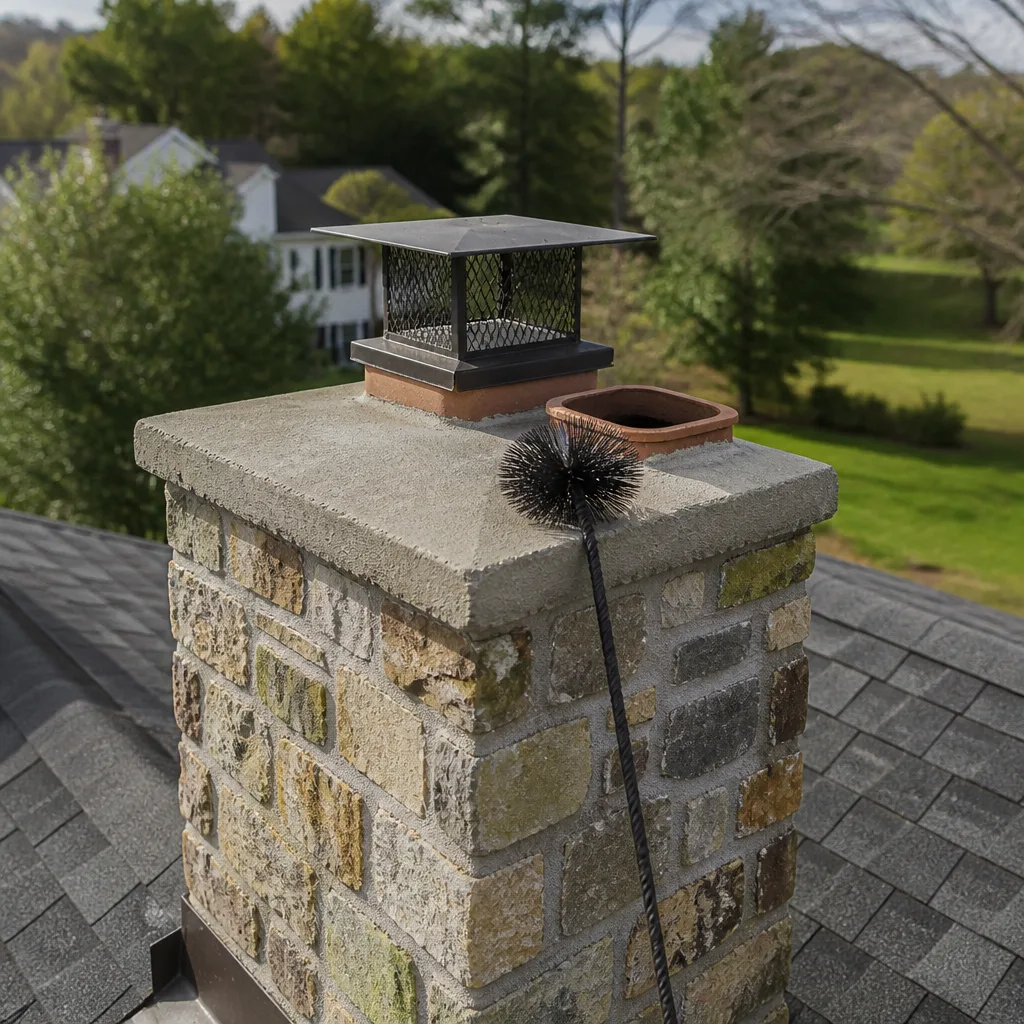 Sweep & inspection
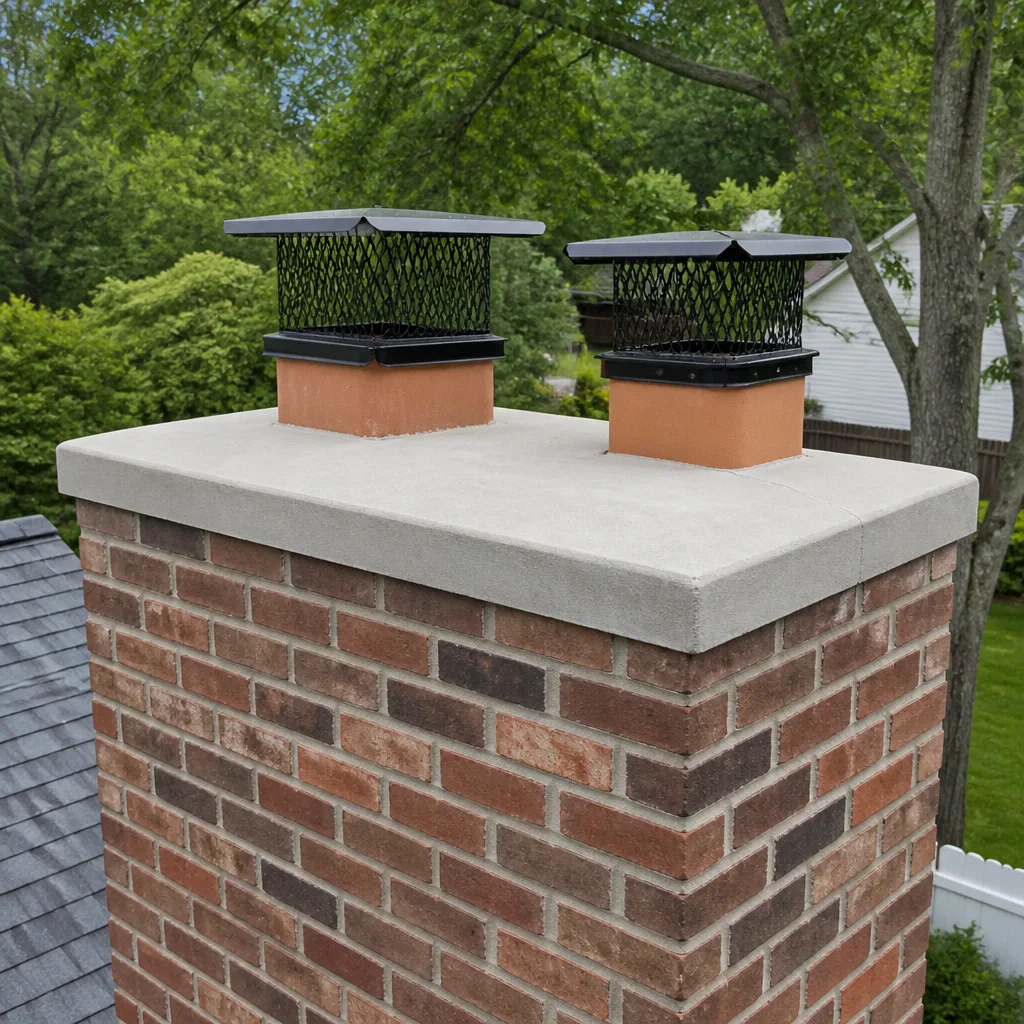 Caps & crowns
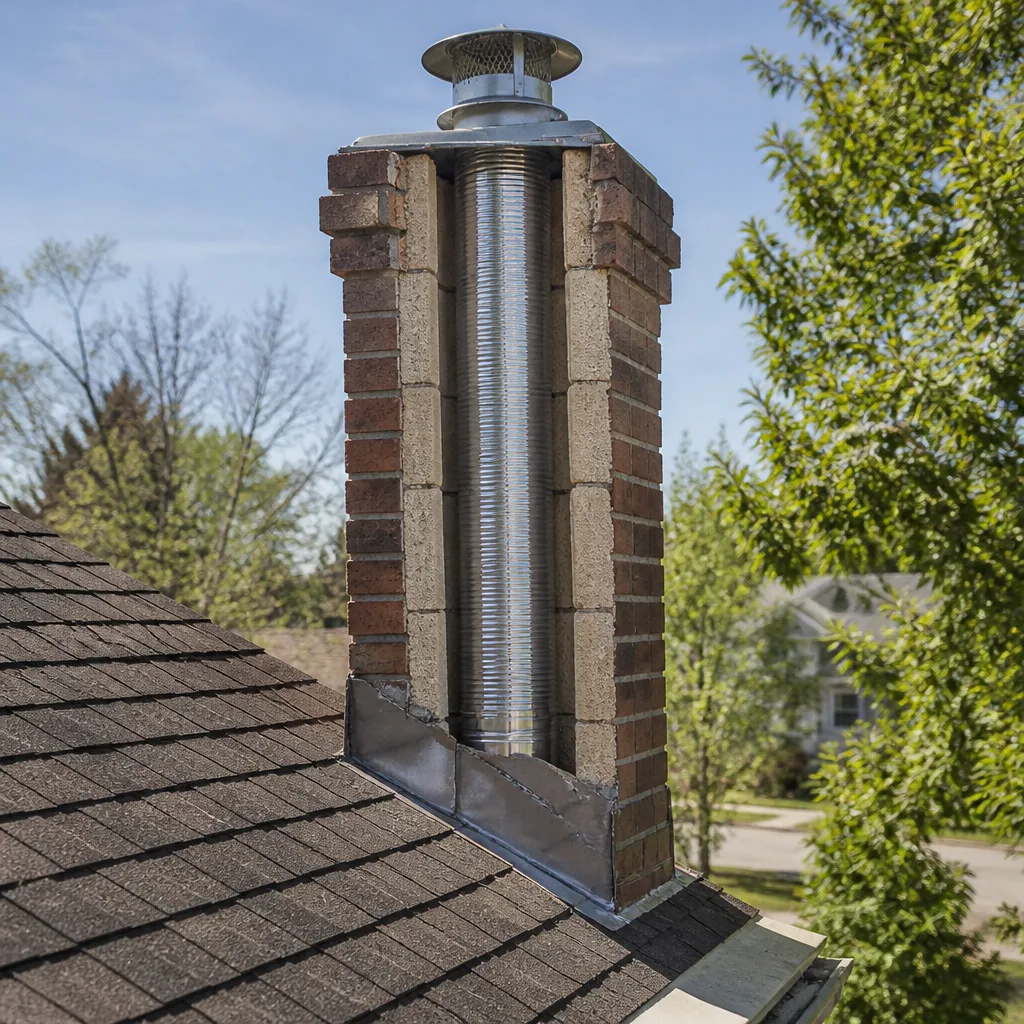 Flue relining
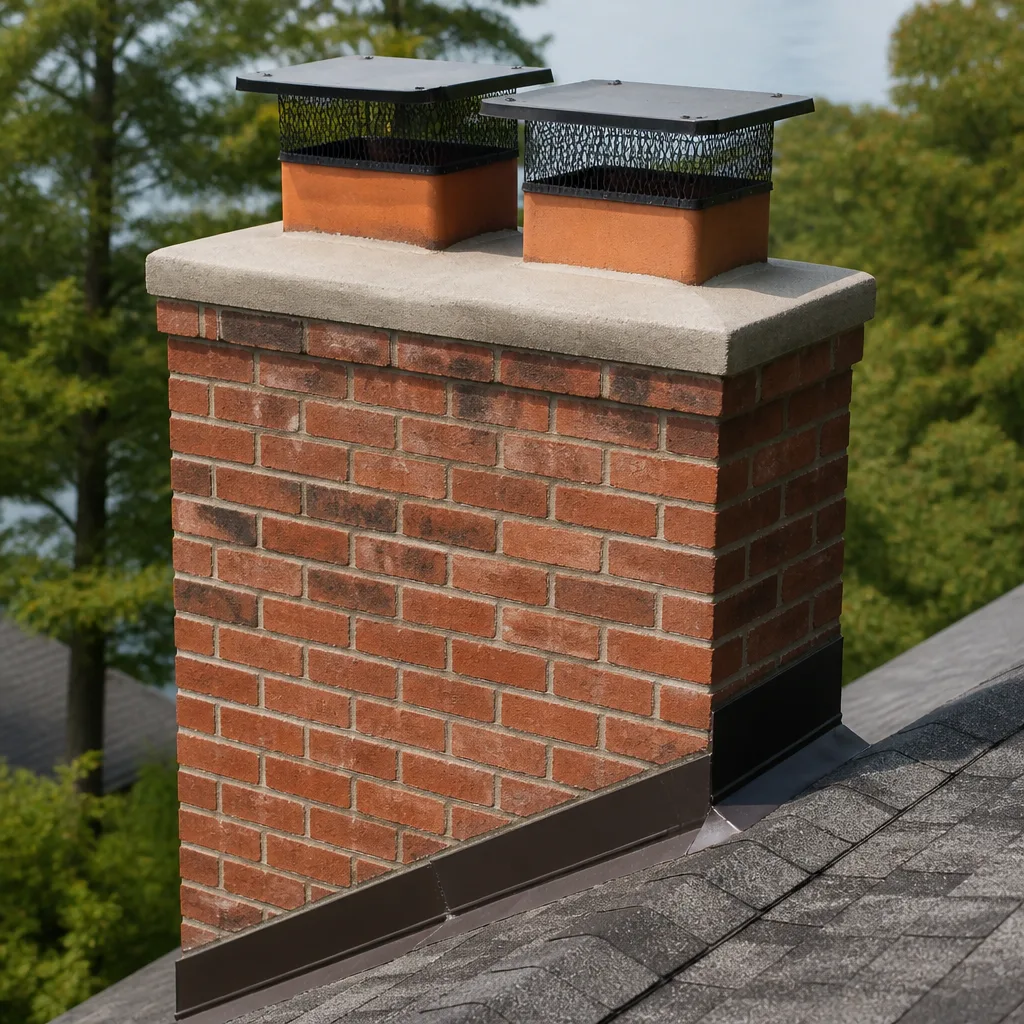 Masonry repair
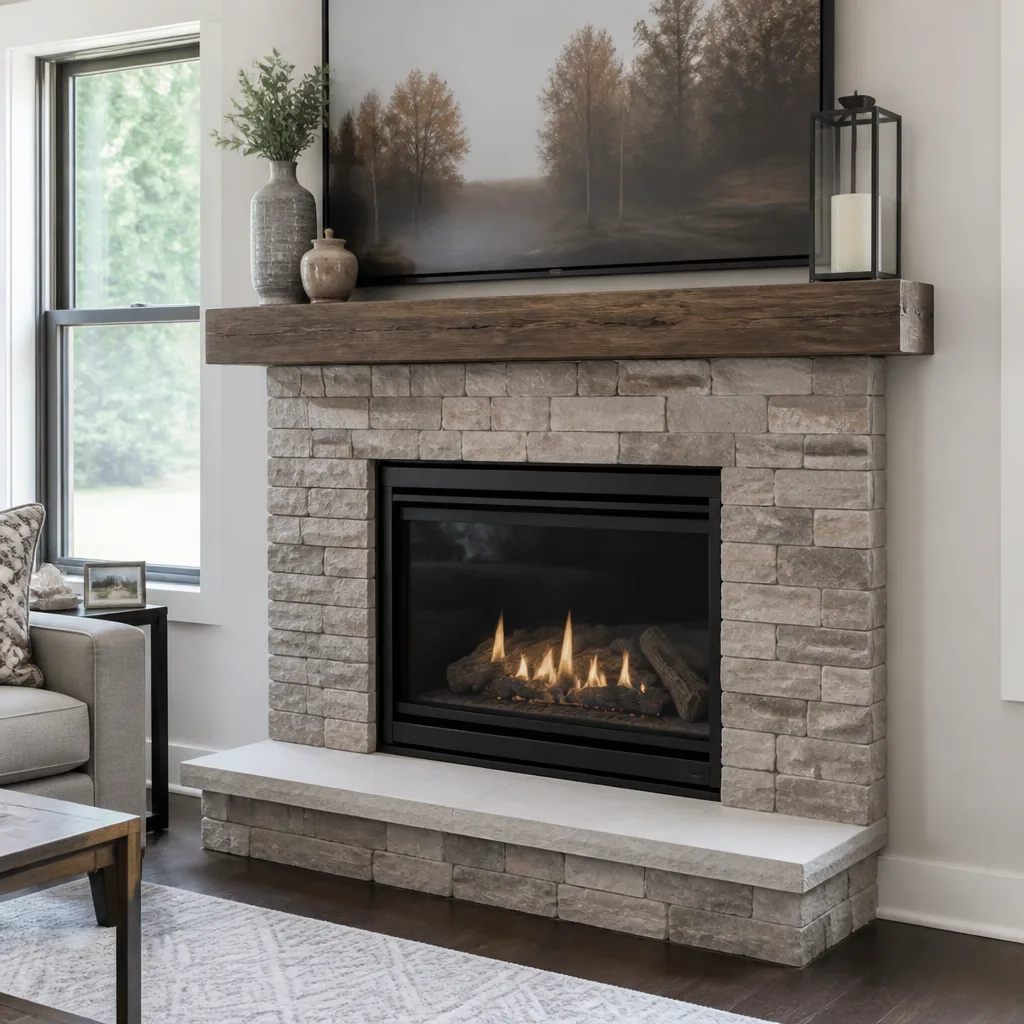 Gas fireplace service
Level 1 sweep and inspection to the NFPA 211 annual standard - flue, crown, cap, and flashing checked and photographed
Chimney sweep logs do not sweep chimneys. They loosen some creosote - which then falls where a brush and vacuum still have to collect it.
Chimney Cleaning Warning Signs: A Renton Homeowner’s Reference Guide
A white stain on your chimney’s exterior brick isn’t cosmetic. It’s your masonry telling you water has already gotten inside, and it’s one of the clearest signals a chimney sends before real damage sets in. Most chimney problems announce themselves early, through stains, sounds, smells, and the way a fire behaves, but only if you know what you’re looking at. This guide walks through the specific, observable warning signs a Renton homeowner can spot from the driveway, the firebox, and the living room, and it sorts them into two categories: schedule a visit soon, or stop using the fireplace today.
Quick Answer
Exterior efflorescence, spalling brick, and gaps at the flashing usually mean water intrusion that needs attention within weeks. Glazed black creosote inside the firebox, smoke rolling back into the room, or a damper that won’t seal are signs to stop using the fireplace and book a sweep before the next fire. Any sign of a cracked flue liner or a strong acrid smell with no fire burning is a stop-now signal. Call (877) 792-7176 and we’ll schedule a visit.
Styles & brands we work with
- Sweep & inspection
- Caps & crowns
- Flue relining
- Masonry repair
- Gas fireplace service
Table of Contents
- Exterior Warning Signs and What They Reveal About Structure
- Interior Warning Signs You Can See From the Firebox
- Operational Warning Signs During a Fire
- Stop Using the Fireplace Today vs. Schedule Within 30 Days
- How to Photograph and Describe What You’re Seeing
- Why Renton’s Wet Season Accelerates Chimney Wear
- How Often a Renton Chimney Should Be Swept and Inspected
Exterior Warning Signs and What They Reveal About Structure
Stand back from the house and look at the chimney the way you’d look at a roof: from a distance, then close. The exterior is where water damage shows first. In a wet-climate city like Renton, the outside of a chimney takes a beating between October and April, and the signs below are the ones we look at first on any visit.
Efflorescence: the white stain that means water is inside
Efflorescence is a chalky white or gray deposit on the brick surface. It forms when water gets into the masonry, dissolves salts from the brick and mortar, and pushes those salts back out as the chimney dries. The stain itself is harmless. What it tells you is not. Efflorescence means moisture has a path into the chimney structure, usually through the crown, the flashing, or the mortar joints. Left alone, the same water that made the stain will freeze, expand, and start breaking the brick apart.
Spalling brick: freeze-thaw damage in progress
Spalling is when the face of a brick peels, flakes, or pops off. In Renton’s climate, water seeps into the brick, temperatures drop below freezing on winter nights, the water expands, and the brick face gives way. Once spalling starts, it doesn’t reverse on its own. You’ll see it as pitting, crumbling corners, or brick fragments on the roof or ground below the chimney.
Gaps at the flashing
The flashing is the metal that seals the joint where the chimney meets the roof. If you can see a gap, a lifted edge, or rusted-through metal, water has a direct path to the attic and the ceiling below. This is one of the most common causes of interior water stains that show up far from the chimney itself.
Deteriorated crown and missing cap
The crown is the sloped concrete top of the chimney that sheds water. When it cracks or crumbles, water runs straight down into the flue. A missing or damaged cap opens the flue to rain, birds, and debris. Both are moisture pathways, and both are fixable. We install professional-grade caps and crowns, including Gelco caps, that block the two most common water entry points on any chimney.
Interior Warning Signs You Can See From the Firebox
You don’t need to climb onto the roof to spot a serious problem. Some of the most important warning signs are visible from inside the fireplace opening, with a good flashlight. Look up into the smoke chamber and the flue as far as you can see.
- Glazed black coating: Shiny, tar-like creosote on the flue or smoke chamber walls is Stage 3 creosote, the hardest and most flammable grade. It’s the residue left when fires burn cool and smoky, and it’s the fuel that turns a small chimney fire into a structure fire. If you see it, stop burning and book a sweep.
- Cracked or missing mortar joints: Run your flashlight along the brickwork. Eroded or missing mortar in the smoke chamber or firebox means water and heat are working on the structure from the inside.
- Damper that won’t seal: Close the damper and see if light gets past it, or if the handle moves freely without resistance. A warped or rusty damper that won’t seal lets conditioned air escape up the flue all year and lets cold air and moisture down when the fireplace is idle.
- Cracked firebox brick or liner panels: Hairline cracks may be cosmetic. Wide cracks, gaps, or missing pieces are not. They put heat directly against the surrounding framing.
- Rust or water stains inside the firebox: Rust on the damper or firebox hardware, or mineral streaks on the firebox walls, point to water coming down the flue from above.
Newer homes across Renton, from the Highlands down toward Kennydale, often have factory-built fireplaces with metal flue liners. Those liners can crack or separate at the joints in ways that aren’t visible without a camera. A video inspection catches what a flashlight can’t. If a liner is deteriorating, HeatShield ceramic resurfacing can often restore it without a full tear-out, which is a service many sweep-only companies don’t offer.
Operational Warning Signs During a Fire
The way a fire behaves tells you as much as the way the chimney looks. These are the signs you notice while a fire is burning or right after it goes out, and each one points to a specific part of the system that’s failing.
- Smoke rolling back into the room: Draft is being blocked or reversed. Common causes are a partially closed damper, a flue clogged with creosote or debris, a flue that’s too short for the chimney height, or negative pressure pulling air down the flue from another exhaust source in the house.
- Sluggish, lazy draft: The fire struggles to catch, smoke hangs at the top of the firebox, or the flame wavers. This points to a partially blocked flue, poor chimney design, or a firebox that’s too large for its flue.
- Strong acrid or smoky odor with no fire burning: Creosote smell that lingers when the fireplace is cold usually means heavy creosote buildup in the flue, or a downdraft pushing it back into the room.
- A whooshing, roaring sound that isn’t your fire: If you hear a deep rumble or whooshing from above the firebox while a fire is burning, that’s a possible chimney fire. Get everyone out and call the fire department. Don’t open the firebox lid or try to inspect it yourself.
- Excessive soot deposits on the firebox glass: A firebox door that fouls with black soot within a few burns means incomplete combustion, often from poor draft or wet firewood.
If any of these happen once, note the conditions: outdoor temperature, wind, whether kitchen or bath fans were running, and what kind of wood you burned. Patterns matter. Some problems repeat with a specific set of conditions, and that’s exactly the context a technician needs.
Stop Using the Fireplace Today vs. Schedule Within 30 Days
Not every warning sign is an emergency. Sorting them correctly saves money without gambling on safety. Here’s the triage we use when a homeowner calls in a Renton chimney problem.
Stop using the fireplace today
- A visible cracked or separated flue liner, or a camera report confirming one (internal document from a prior inspection)
- Glazed, shiny creosote visible on the smoke chamber or flue walls
- Smoke backing into the room repeatedly, with no obvious cause you can correct
- Any roaring or whooshing sound during a burn, or the smell of smoke in rooms that shouldn’t have smoke
- Carbon monoxide alarms sounding or a CO detector that has gone off in a room near the fireplace
- Visible flame coming through a crack in the firebox brick
Schedule within 30 days
- White efflorescence stains on exterior brick
- Mild spalling or crumbling on a few bricks
- A damper that won’t seal completely
- Sluggish draft, without backdrafting
- A missing or damaged cap
- Sooty firebox glass that builds up quickly
Efflorescence and minor spalling are slow-acting. The damage moves at the pace of the weather: a wet Pacific Northwest winter, a dry summer, then another freeze. You have time to schedule a visit and get it fixed right. Creosote and cracked liners don’t move slowly. They sit there as fuel and as pathways for heat until the conditions line up badly. The difference between the two lists is time.
How to Photograph and Describe What You’re Seeing
A good call gives the technician exactly what they need to bring the right tools and parts. A clear phone photo and a few lines of description makes the difference between one visit and two. Here’s how to do it.
- Step back for the exterior shot. Take one photo from the ground, straight on, showing the full chimney height. Then a close shot of any stain, crack, or spalling.
- Use the flashlight inside. Shine a strong light up into the smoke chamber and take a photo looking up. Your phone camera in a dark flue can miss detail, so if you have a small flashlight, shine it to the side to light up the walls.
- Photograph the firebox. Take one shot of the firebox interior and one of the damper with the handle up and the handle down.
- Note the type of chimney. Is it masonry brick, or a factory-built metal fireplace? The rating plate is usually inside the firebox frame or behind the screen. A photo of that plate tells the technician exactly what you have.
- Describe the fire behavior, not the diagnosis. Say “smoke rolls back into the room when I start a fire” rather than “my flue is blocked.” Clear symptoms help more than guesses.
- Note the age of the last sweep and inspection if you know it, and whether the fireplace is wood-burning or gas.
When you call Renton Chimney Sweep Pros, we’ll ask for the same details. If you have photos, share them. Our technicians have up to 12 years of experience reading exactly these signs, and a photo helps us decide whether the visit is a routine sweep, a camera inspection, or a repair call. The estimate is free, and we’ll quote the job in writing before any work begins.
Why Renton’s Wet Season Accelerates Chimney Wear
Renton sits between the Cascade foothills and Puget Sound, and its weather does one thing consistently: it cycles. Wet fall, wetter winter, a dry summer, then wet again. That cycle is what drives most of the exterior warning signs above. Water soaks into brick and mortar during the rainy months, then expands when temperatures dip below freezing on a clear winter night. The freeze-thaw cycle works on masonry the way a wedge works on a log: a little each time, until something gives.
The same weather pushes water down the flue. A chimney crown that has started to crack lets rain straight into the smoke chamber, and a missing cap does the same thing from the top. That’s why we treat chimney cap & crown as a standalone service here, not just an add-on. A properly installed cap and a solid crown stop the water before it reaches anything structural. It’s the cheapest repair in chimney work and one of the most effective at extending a chimney’s life.
Inside the home, Renton’s cool, damp winters mean fireplaces run long hours between October and March. Long burns build creosote faster. That’s not a local quirk, it’s just physics: the more wood you burn, the more often the flue needs a sweep. Neighborhoods like the Highlands and Renton Hill, where older masonry chimneys are common, see more efflorescence and spalling calls than newer construction. Homes up toward Kennydale and along the lake tend to have more issues with cap and crown damage and roof-line flashing, which is a roofer’s game as much as a chimney specialist’s.
We don’t have to guess what the weather is doing. We look at the specific signs your chimney is showing and tell you what they mean.
How Often a Renton Chimney Should Be Swept and Inspected
The short answer: sweep when the creosote layer reaches about 1/8 inch, and inspect annually. In a Renton home that burns regularly through the wet months, that’s usually an annual sweep. In a home that burns a fire a few times a season, it may be every other year. Gas fireplaces need less frequent sweeping but still need an annual inspection, because gas venting has its own failure modes.
A professional inspection covers three things:
- Visual check of accessible parts of the firebox, damper, smoke chamber, and cap
- A camera inspection of the flue to look for cracks, gaps, and creosote buildup
- A photo report you keep, which is what makes recommendation questions answerable. If a sweep tells you that you need a new liner or masonry work, the photo evidence should be right there in front of you.
If an inspection finds a cracked liner, we may recommend lining it with a DuraFlex system, or resurfacing a deteriorated flue with HeatShield ceramic. Both are professional-grade products, and both are chosen for the specific liner type. We don’t recommend either unless the camera shows a real problem, and we’ll tell you plainly when a repair can safely wait. Sometimes the honest answer is that your chimney has years left and needs a sweep, not a rebuild.
When you’re ready, book a chimney sweep and we’ll walk you through what we find. If the inspection turns up liner damage, we can schedule the repair on the same visit cycle so you’re not waiting weeks for a follow-up.
Common Mistakes to Avoid
- Painting over efflorescence instead of fixing the water source. Paint traps moisture inside the brick, and the white stain returns within a season. The fix is stopping the water at the crown, flashing, or cap.
- Treating a missing cap as cosmetic. An open flue takes in rain, birds, and debris, and every one of those becomes a draft problem or a blockage. A Gelco cap is one of the simplest preventive repairs you can make.
- Burning wet or unseasoned firewood in Renton’s damp climate. Wet wood burns cool and smoky and builds creosote fast. Wood that has seasoned for a full year burns cleaner and puts less of a creosote load on the flue.
- Ignoring a sluggish draft because the fire “eventually catches.” A fire that smolders before it lights is telling you the flue is restricted or the firebox is undersized for its flue. Don’t wait until smoke is in the room to fix it.
- Calling a handyman for a chimney problem. Chimney work involves the liner, the crown, the flashing, and the firebox. A generalist will handle one piece and miss the system. Every job we do, every technician we work with, every product we specify is chimney-specific.
- Skipping the annual inspection because the fireplace “looks fine.” Cracks in a liner, joint separation in a factory-built flue, and heavy creosote on the smoke chamber don’t show from the living room. Only a camera inspection finds them.
- Burning without a chimney cap in a neighborhood with mature trees. Leaves, twigs, and bird nests are a common cause of blocked flues and backdrafting after a storm. A cap keeps them out.
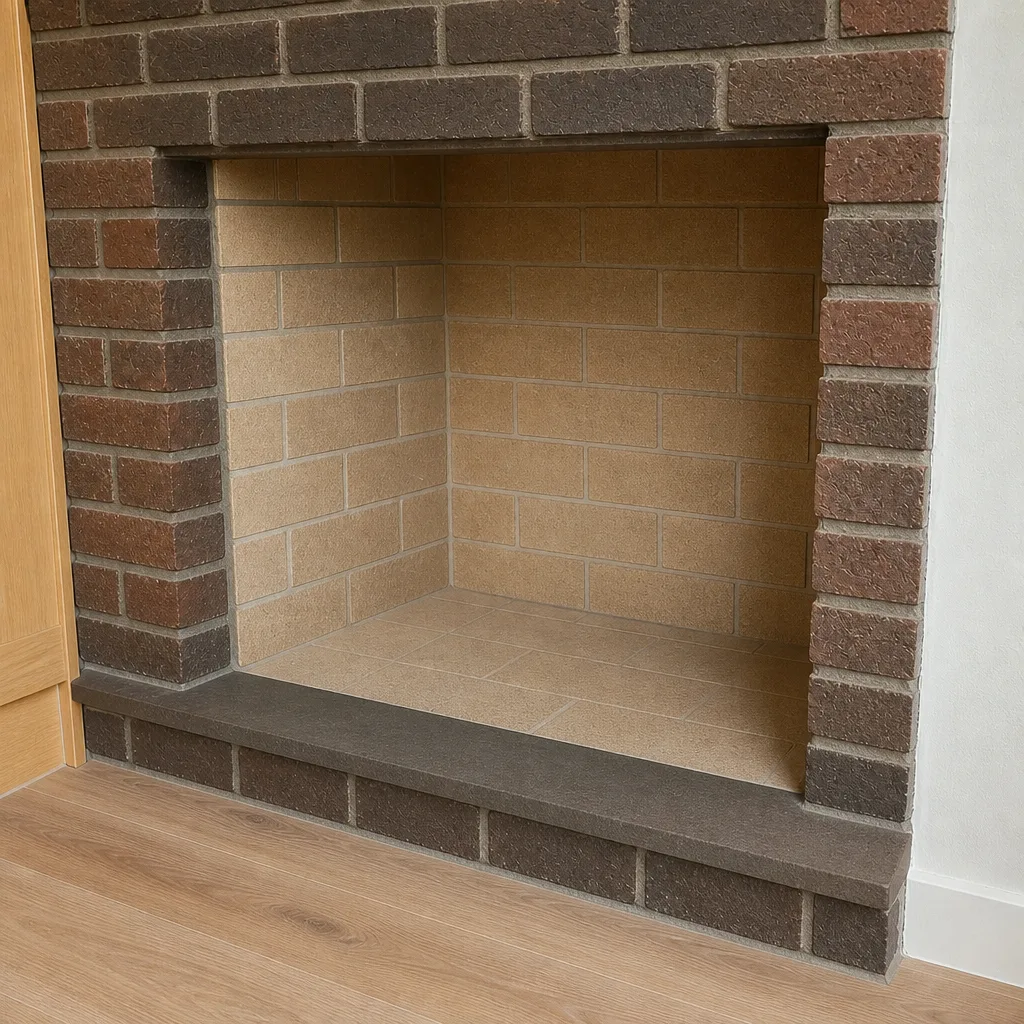
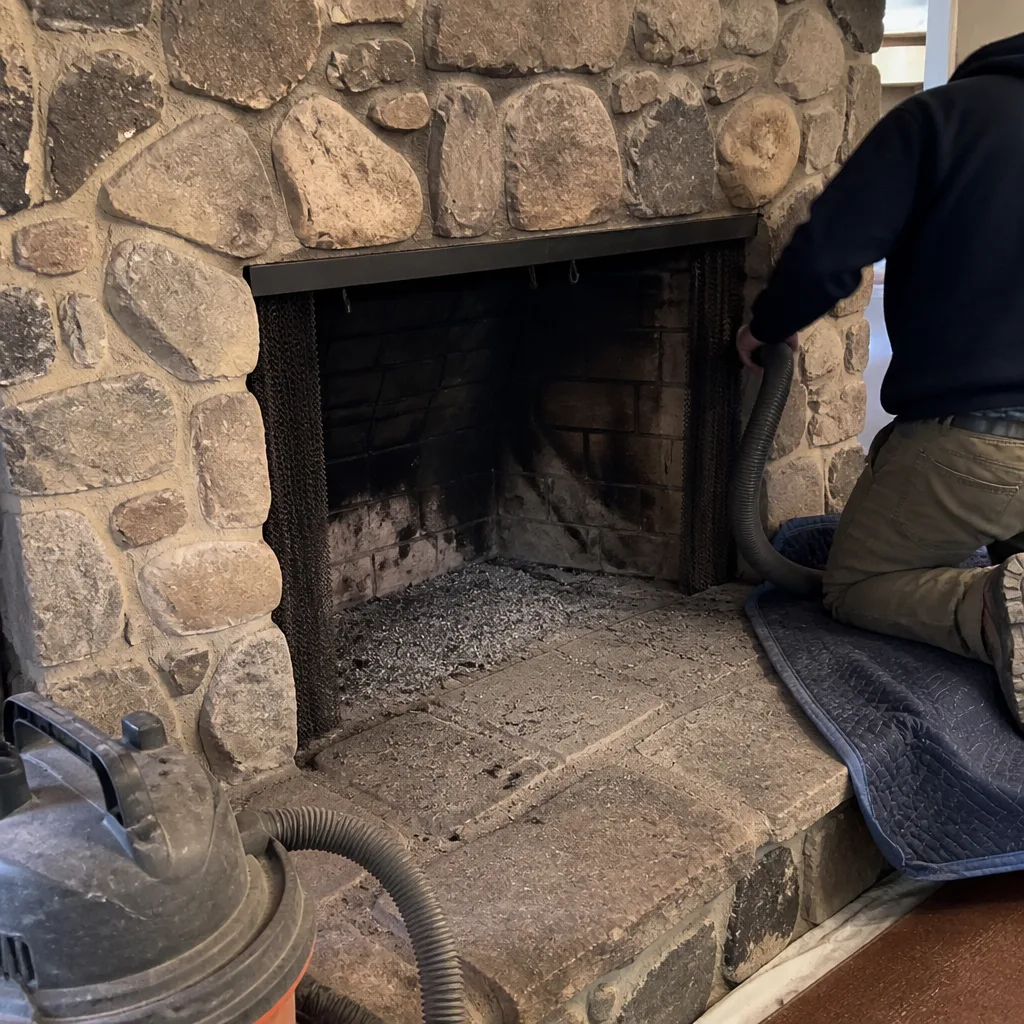
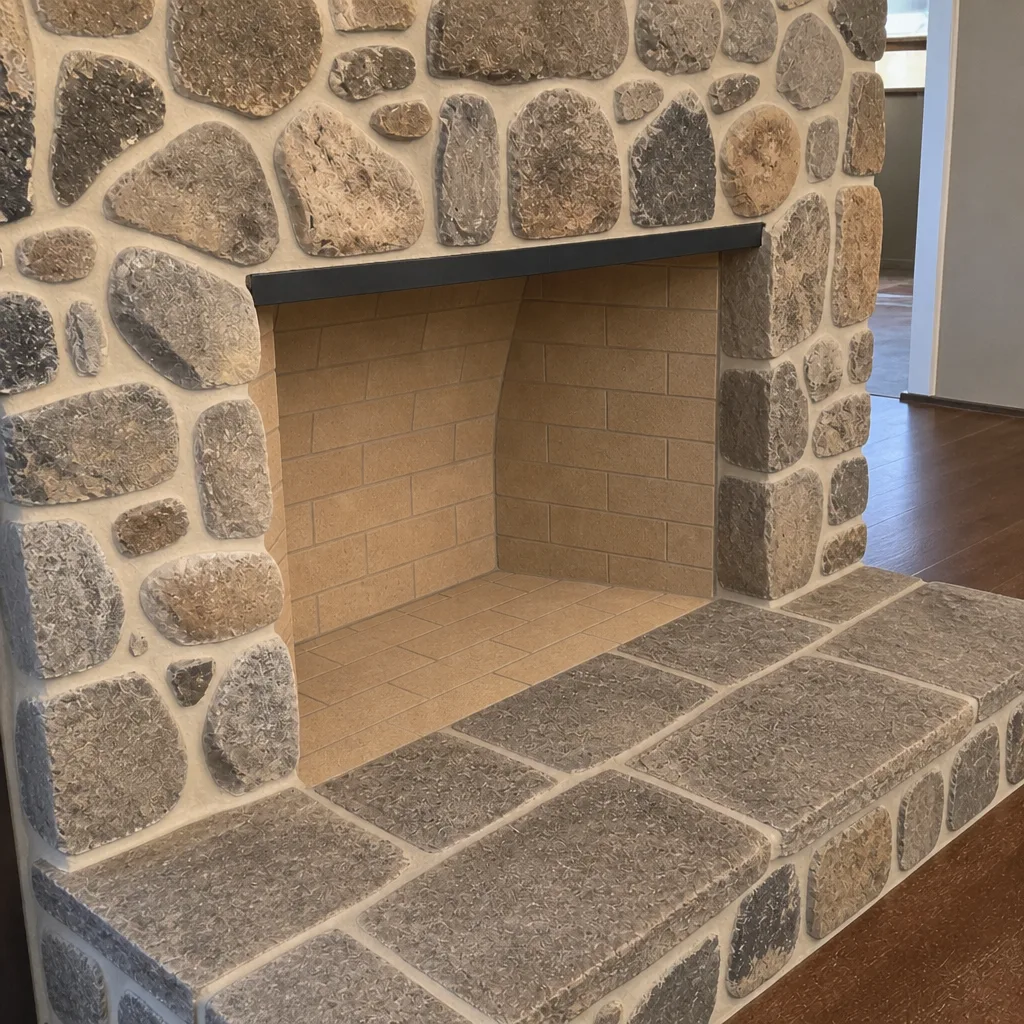
See the difference
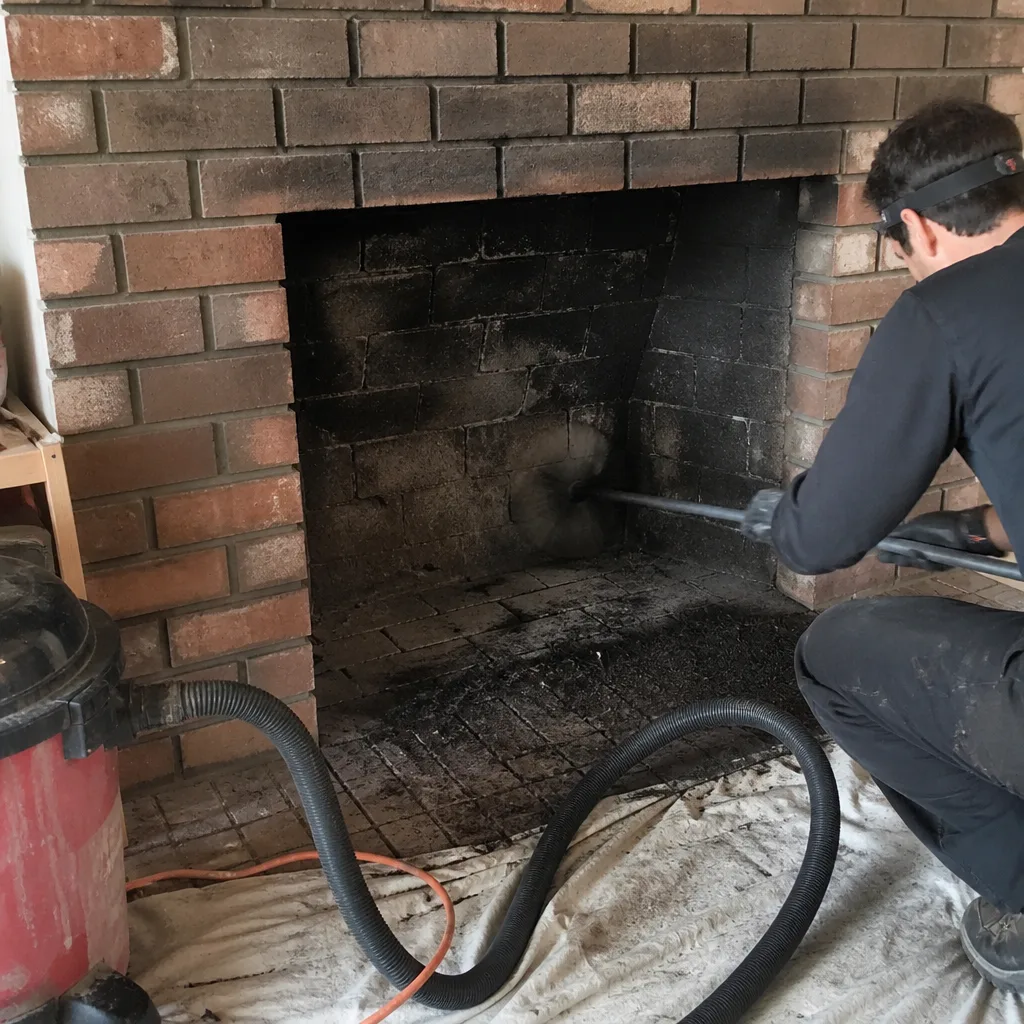 Before
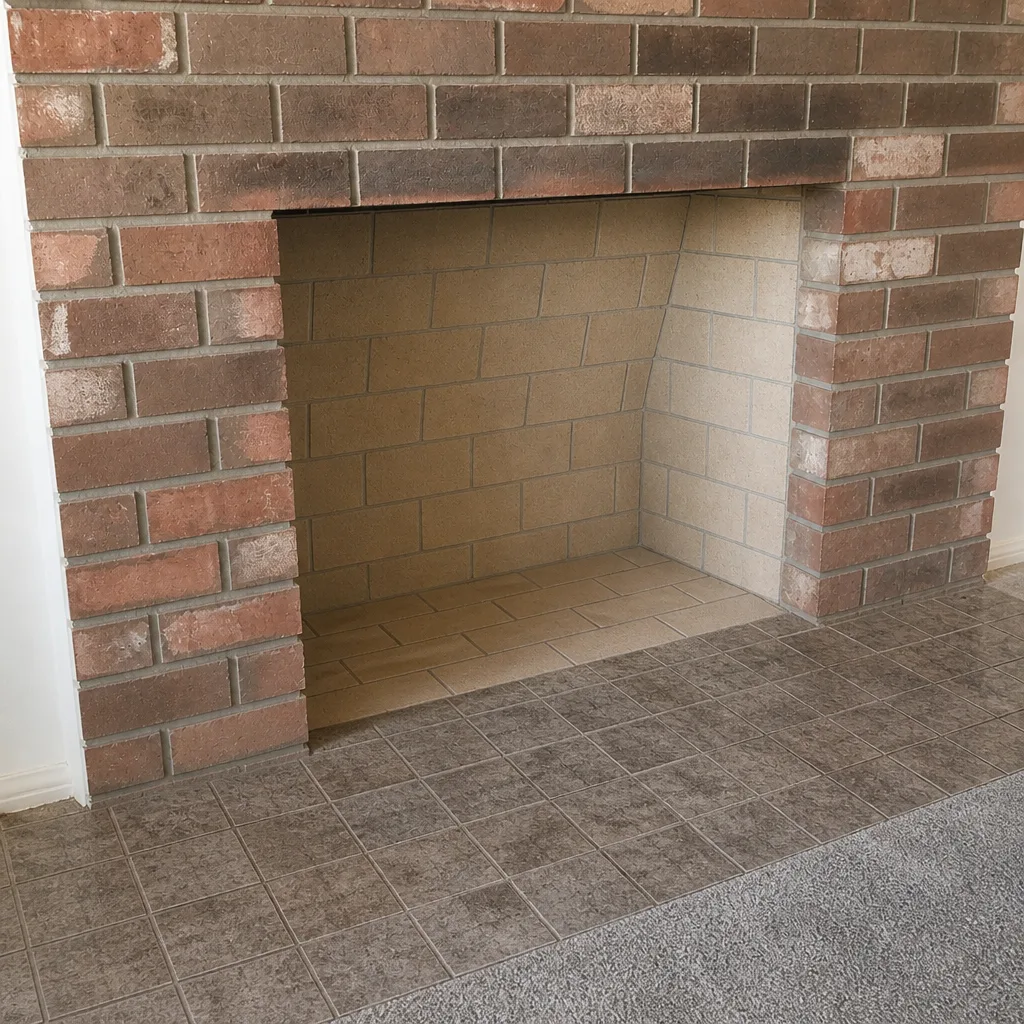 After
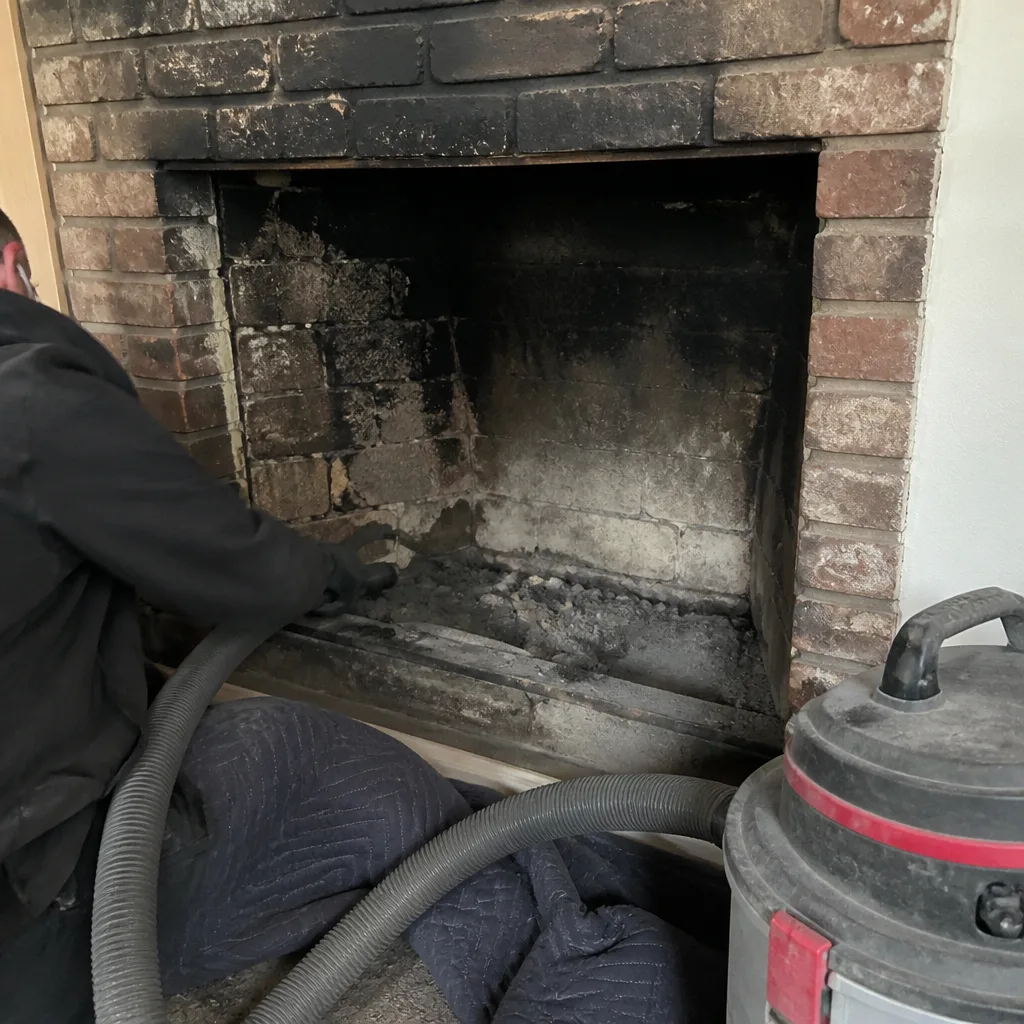 Before
 After
 Before
 After
When to Call a Professional
Call a professional when you see any sign on the stop-now list, when smoke comes into the room during a fire, when the flue smells strongly of creosote with no fire burning, or when you haven’t had an inspection in more than a year. Also call if you’ve noticed efflorescence or spalling on the exterior and you’re not sure whether the damage is active or historical, because the answer changes the repair. And call if you’re buying a Renton home with a fireplace and the seller can’t produce inspection records. A camera inspection and photo report give you a defensible picture of what you’re buying. Renton Chimney Sweep Pros offers free estimates in Renton. Call (877) 792-7176. We answer 24/7. Fast dispatch from 7am to 7pm, Sunday through Friday.
Frequently Asked Questions
It’s serious enough to warrant a visit. The white stain is efflorescence, and it means water is already getting into the masonry. The stain itself doesn’t damage anything, but the moisture path that created it does. If it’s caught early, the fix is usually a crown repair, flashing repair, or a new cap. If it’s ignored through several Renton winters, spalling brick and structural repair follow.
Stage 3 creosote looks like a shiny, hard, tar-like coating on the flue or smoke chamber walls. Stage 1 is dry and sooty, Stage 2 is flaky and crusty, and Stage 3 is glazed and shiny. You can sometimes see it by shining a flashlight up into the smoke chamber, but a camera inspection is the reliable way to confirm it and to check the full length of the flue. If you see the glazed coating, stop burning until a sweep clears it.
Yes. A slow-burning chimney fire can sound like a low rumble or a distant roar, and a homeowner may mistake it for wind or the fire itself. Signs to watch for after a fire: puffy, honeycombed creosote on the flue walls, warped damper metal, cracked flue tiles, or the smell of burnt creosote in the house the next day. If you suspect one, book an inspection before lighting another fire.
Ask to see the camera footage and the photo report. A cracked, separated, or deteriorated liner shows clearly on camera, and the fix should be documented in front of you. If the footage is clean, you don’t need a liner. If it shows real damage, it’s not an upsell, it’s the reason a chimney is unsafe. Repair options include relining with a DuraFlex system or resurfacing with HeatShield, depending on the liner type. Call (877) 792-7176 for a free estimate. We answer 24/7. Fast dispatch from 7am to 7pm, Sunday through Friday.
Annual is the safe default for a home that burns regularly through the winter. Sweep sooner if the creosote layer reaches about 1/8 inch, if you notice a strong creosote odor with no fire, or if the fire has started to draft poorly. Gas fireplaces need an annual inspection even though they need less sweeping. If you want a specific answer for your fireplace, a quick camera inspection settles it.
Creosote builds up on the flue walls, and the more it builds, the more there is to burn if a hot ember or spark catches it. A chimney fire can damage the flue, crack the liner, and spread into the surrounding structure. Even without a fire, the same buildup restricts draft, drives smoke into the room, and lets moisture sit against the masonry. A cheap annual sweep is the way to avoid expensive structural repair later. Call (877) 792-7176 for a free estimate before the next burn.
The Bottom Line
The warning signs on this list aren’t exotic. Efflorescence, spalling brick, gaps at the flashing, glazed creosote, a damper that won’t seal, smoke backing into the room, and a roaring sound during a burn are all visible or audible to any homeowner who knows what they’re looking for. Sort them correctly. The stop-now signs mean close the damper and call. The schedule-soon signs mean book the visit within the month. Everything on the list is cheaper to fix before it becomes a repair. Renton Chimney Sweep Pros works with professional-grade brands including DuraFlex, HeatShield, Gelco, Olympia Chimney, and Famco, and we handle inspection, sweep, cap, crown, and fireplace repair from cap to firebox. When you need a second look at any of these signs, call (877) 792-7176 for a free estimate.
For related work, take a look at our fireplace repair service or professional chimney cap & crown installation. You can also visit Renton Chimney Sweep Pros to see the full range of services.
Written by the team at Renton Chimney Sweep Pros.