
Last updated November 24, 2026
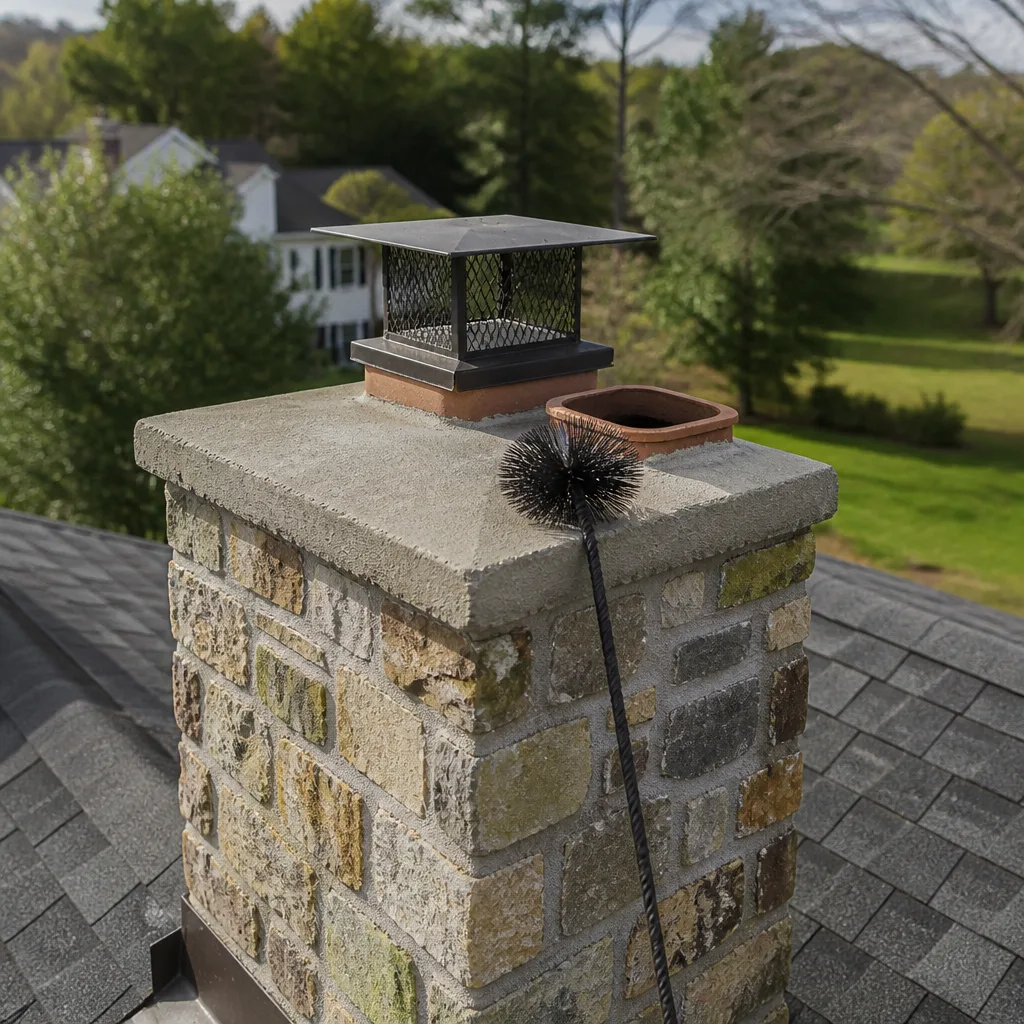 Sweep & inspection
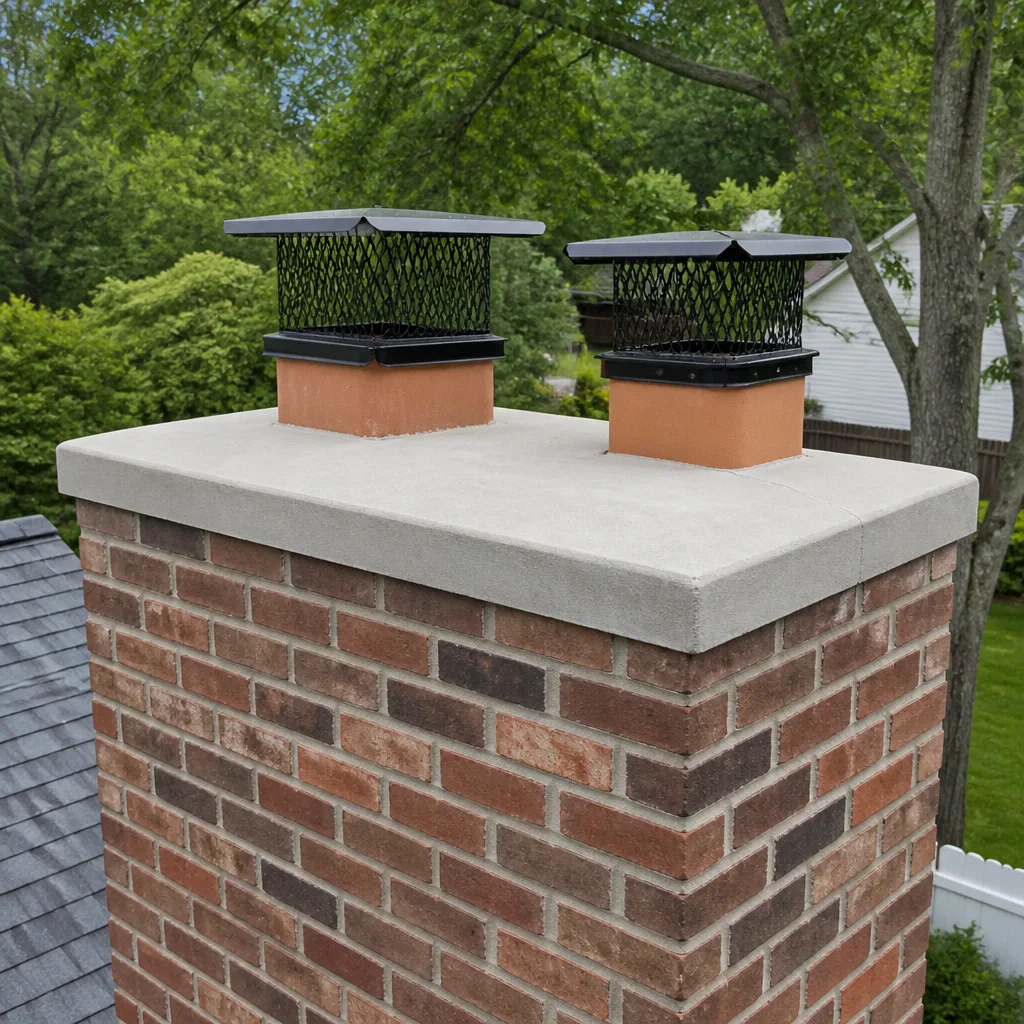 Caps & crowns
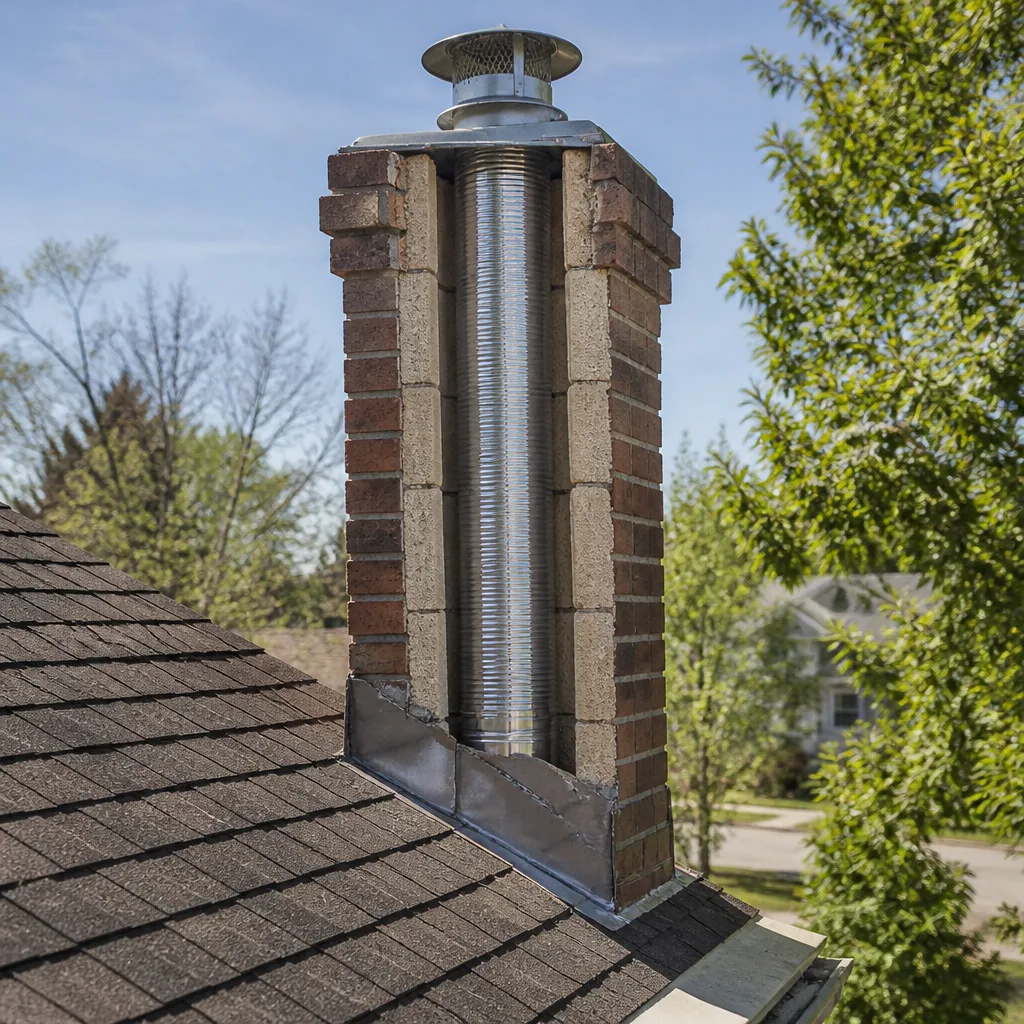 Flue relining
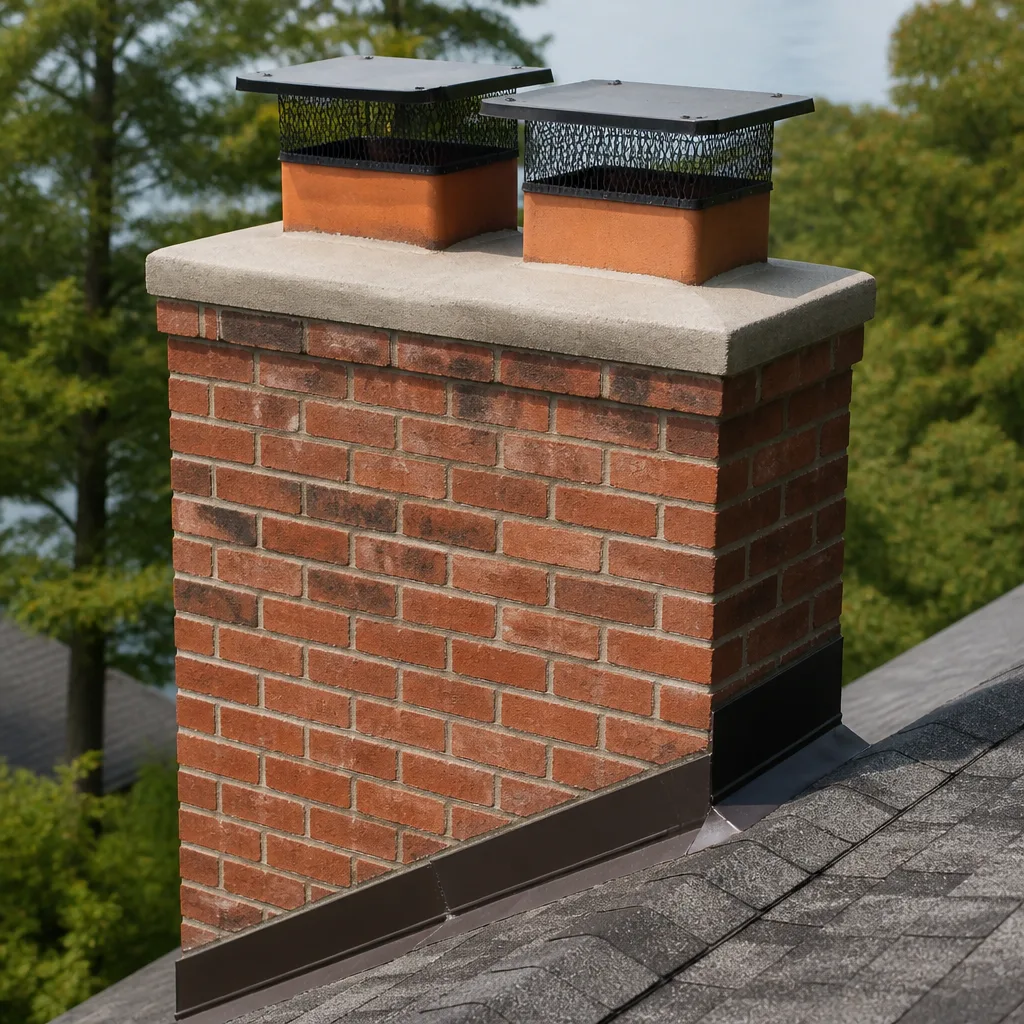 Masonry repair
 Gas fireplace service
Level 1 sweep and inspection to the NFPA 211 annual standard - flue, crown, cap, and flashing checked and photographed
Chimney sweep logs do not sweep chimneys. They loosen some creosote - which then falls where a brush and vacuum still have to collect it.
How to Hire a Chimney Cleaning Contractor in Renton: A Step-by-Step Guide
Most homeowners hire a chimney sweep the way they hire a gutter cleaner: find the cheapest quote, book it, done. That’s the wrong mental model, and it’s why so much chimney work around Renton gets done twice. A chimney is a ventilation system with a fire underneath it, and the person you let onto your roof and into your flue is making decisions that affect how your house handles smoke, moisture, and carbon monoxide for years. This guide walks through hiring as a trade evaluation rather than a price comparison – the credentials that actually mean something, the red flags that show up in this market, and the exact questions that separate a chimney specialist from a general handyman with a brush kit.
Quick Answer
Hire a chimney contractor in Renton by verifying three things before you book: a current certification from a recognized body (CSIA is the standard), proof of liability insurance and a state contractor registration, and a written inspection report delivered after the sweep. Ask up front what happens if they find damage and whether repairs are done in-house or subbed out. Price comes last – compare written quotes on scope, not on the bottom line, because a cheap sweep that misses a cracked liner is the most expensive call you’ll make.
Styles & brands we work with
- Sweep & inspection
- Caps & crowns
- Flue relining
- Masonry repair
- Gas fireplace service
Table of Contents
- What certifications should a Renton chimney sweep actually hold?
- Why a Washington State contractor license is not enough on its own
- The five questions to ask before you book
- Red flags in the Renton chimney service market
- What a real inspection report looks like
- How to compare written quotes apples to apples
- What happens when the sweep finds damage
- When to book in Renton’s burn season
What certifications should a Renton chimney sweep actually hold?
Three credentials come up in this trade, and they don’t cover the same ground. Knowing which is which keeps you from accepting a certificate that doesn’t apply to the work being quoted.
- CSIA (Chimney Safety Institute of America). This is the baseline credential for sweeping and inspection. It’s earned through a substantial course of study and a proctored exam, and it has to be renewed. A technician who can’t name their certification body on the spot hasn’t earned one.
- NFI (National Fireplace Institute). This certifies technicians on hearth appliances – gas, wood, and pellet – and covers installation and venting specifics. It matters if your job involves a fireplace insert, a stove, or gas appliance venting rather than a straightforward flue sweep.
- NCSG (National Chimney Sweep Guild). This is a trade membership organization, not a certification body. Membership signals a company is plugged into the trade, but it isn’t a competency exam. Treat it as a good sign, not proof.
For a routine sweep and visual inspection in Renton, CSIA certification is the one to verify. If the quote involves relining, a stove install, or gas venting work, ask specifically about NFI. Our technicians have up to 12 years of experience, and the ones doing liner work are trained on the specific systems being installed – DuraFlex among them – because specifying the wrong product for a flue type is how a repair fails early.
Ask for the certification number and the certifying body, then check it. Both CSIA and NFI maintain public lookups. A legitimate technician will hand this over without flinching. Anyone who gets vague or says “we’re all certified” without naming the body is telling you something.
Why a Washington State contractor license is not enough on its own
Washington requires contractors to register with the state Department of Labor & Industries, and you can and should verify that registration before anyone works on your home. It establishes that the business is registered, bonded, and carrying the insurance the state requires. What it does not establish is that the person on your roof knows a masonry flue from a factory-built one.
Plenty of general contractors hold a valid Washington registration and have never swept a chimney. The registration is a floor, not a ceiling. Chimney work sits at the intersection of combustion safety, masonry, and roofing – and a generalist who’s competent at two of those three can still leave you with a venting problem.
So verify both layers:
- Check the contractor registration on the L&I website. Confirm the business name matches the quote.
- Ask for the certificate of insurance and confirm the coverage is current – general liability at minimum, and workers’ compensation if they employ anyone.
- Confirm chimney-specific certification (CSIA, and NFI where relevant) separately from the state registration.
- Ask whether the company is a dedicated chimney outfit or a general contractor that adds chimneys to a longer service list. The answer shapes how much diagnostic depth you’ll get.
The reason this matters in Renton specifically: housing stock here spans everything from mid-century ranches with masonry fireplaces to newer construction with factory-built systems and gas inserts. Those need different tools, different inspection methods, and different replacement parts. A company that works only on chimneys carries that range of knowledge and the professional-grade components to match – Olympia Chimney supply-chain sourcing, Famco venting products, Copperfield components – rather than whatever the local hardware store stocks.
The five questions to ask before you book
This is the part most homeowners skip, and it’s the highest-leverage five minutes in the whole process. Ask these before you schedule, not after the technician is on the roof.
- “What certification do you hold, and who certifies you?” You want CSIA named specifically, plus NFI if the job touches an appliance or insert. Write down the number.
- “Are you insured, and can I see the certificate?” Liability and workers’ comp. If a technician falls off your roof, you don’t want that landing on your homeowner’s policy.
- “What does your inspection report include?” You want a written report with photos – the flue interior, the firebox, the cap and crown, and any noted deficiencies. A verbal “looks good” is not a report.
- “What happens if you find damage?” The answer should describe a documented finding and a written estimate for the repair, with the option to hold off if it’s not urgent. Pressure to decide same-day is the wrong answer.
- “Do you do the repairs yourself, or sub them out?” Subbing isn’t automatically bad, but it changes who’s accountable. A full-service chimney company keeps inspection, sweep, liner work, and cap and crown under one roof.
Ask these in a single phone call. The way a company answers tells you as much as the answers themselves. A specialist will talk fluently about flue types and liner systems; a generalist will pivot to price. For a sense of what a proper chimney sweep visit involves from start to finish, that page covers the sequence.
Red flags in the Renton chimney service market
Most bad chimney experiences trace back to one of a handful of patterns. None of them are exotic; they’re common enough that you should be watching for them.
- Vague pricing. A quote that’s “around” a number with no written scope is a quote you can’t compare to anything. You want a written estimate that names the work.
- No written report. If the sweep leaves without documentation of what was found, you have no record of your chimney’s condition and nothing to compare against next year.
- Pressure to decide same-day. Chimney problems are real, but almost none of them require a signature before the technician pulls out of the driveway. A contractor who manufactures urgency is selling, not diagnosing.
- Inability to explain liner systems. Ask what kind of liner your flue has and what would replace it. A technician who can’t tell you the difference between a clay tile flue and a stainless liner system – or why a particular product suits your appliance – isn’t equipped to recommend one.
- “We’ll take a look and let you know.” No stated scope, no stated price, no stated method. This is how a $200 sweep becomes a $4,000 surprise you can’t evaluate.
- A service list that includes gutters, pressure washing, and chimneys. Breadth isn’t a crime, but a chimney is a specialized system. Dedicated chimney companies exist for a reason.
One more, specific to this region: be wary of anyone who can’t tell you how Renton’s wet winters affect a chimney. Moisture is the long-term enemy here – it works on the crown, the mortar joints, and the cap – and a contractor who only thinks about creosote is missing half the picture. That’s why we treat chimney cap & crown work as its own service line rather than an upsell.
What a real inspection report looks like
An inspection report is the deliverable that lets you make decisions without taking anyone’s word for it. The CSIA defines three inspection levels, and knowing which one you’re getting frames the whole conversation.
- Level 1: A visual inspection of readily accessible portions of the chimney and venting, plus the firebox and appliance connection. This is what accompanies a routine annual sweep.
- Level 2: Everything in Level 1 plus inspection of accessible portions of the chimney exterior and interior, often with a camera. Required after a chimney fire, after an appliance change, or when a property changes hands.
- Level 3: Diagnostic inspection that may involve removing parts of the chimney or building to access concealed areas. Rare, and usually following a specific finding.
A usable report includes photos of the flue interior, the firebox and damper, the crown and cap, and any joints or masonry showing deterioration. It should note the flue type, the appliance connected, and the presence or absence of a properly sized liner. If you have a wood-burning fireplace and the report says nothing about the liner, ask why.
Camera inspection and photo documentation are the reason you can trust a recommendation. In our experience, the anxiety homeowners bring to this process isn’t really about cost – it’s about being told they need thousands of dollars of liner or masonry work they have no way to verify. The answer is simple: nothing gets recommended without evidence you can see for yourself, and when work can safely wait, we say so.
How to compare written quotes apples to apples
Two quotes for “chimney repair” can describe wildly different scopes. Comparing the bottom-line numbers without comparing the work is how people end up paying twice. Here’s how to normalize them.
- Match the scope line by line. What’s being swept, what’s being inspected, what’s being repaired, and at what level. A quote that includes a Level 2 inspection with camera and one that includes a visual glance are not the same product.
- Check the materials named. A quote that specifies a DuraFlex liner system, HeatShield ceramic resurfacing, a Gelco cap, or specific Famco venting components is describing a real repair. “New liner” with no product named is a placeholder.
- Ask what’s excluded. Masonry repointing? Crown rebuild? Flue tile removal? The exclusions matter more than the inclusions when you’re budgeting.
- Confirm who does the work. In-house versus subcontracted changes your accountability chain. Ask for it in writing.
- Look for the inspection evidence. A repair quote should reference a specific finding, ideally with a photo. If the quote can’t say what it’s fixing, it isn’t a quote.
When the scopes line up, price becomes a fair comparison. When they don’t, the cheapest number is usually cheap because it’s doing less. A sweep-only company can’t offer HeatShield resurfacing for a deteriorating flue, so their quote will quietly omit it; that’s not a better price, it’s a different job.
What happens when the sweep finds damage
The moment that determines whether you hired well is the one right after the report lands. A good contractor does three things: shows you the evidence, explains what the damage means for how your chimney actually functions, and gives you a written estimate that separates urgent from optional.
Damage generally falls into a few buckets. Creosote buildup beyond a safe level is a sweeping issue and gets handled on the spot. A cracked or missing flue liner is a venting and combustion-safety issue – it’s the one that can’t wait, because the liner is what keeps heat and combustion gases inside the flue and away from the structure of the house. Masonry deterioration at the crown or the mortar joints is a moisture issue that shortens chimney life but often can be scheduled rather than rushed. A missing or damaged cap is a small fix with outsized consequences, since it’s the first line of defense against rain and animals.
Liner work is where specialist capability shows. HeatShield ceramic resurfacing can restore a deteriorating flue in some cases without a full reline; a stainless system like DuraFlex is the right answer in others. Specifying the correct product for your liner type is a diagnostic decision, not a sales one. If the recommendation and the evidence don’t line up, ask. A contractor who can’t walk you through the reasoning has a recommendation you shouldn’t act on.
Our full scope runs from cap to firebox – inspection, sweep, fireplace repair, liner systems, and structural chimney repair – so nothing gets handed off to a second contractor with a second set of assumptions.
When to book in Renton’s burn season
Chimney sweeping is seasonal work, and the season here runs opposite to the weather. Homeowners light the first fire when the evenings turn cold, which means the weeks right before that are the busiest stretch for every sweep in the area. Book the sweep before burning season starts, not after the first smoky fire backs up into the living room.
How often depends on use. The general industry rule is an annual inspection, with sweeping whenever the creosote accumulation warrants it. If you burn regularly through the winter, an annual sweep is the practical baseline. If you burn occasionally, the annual inspection still matters – it’s the cheap check that catches a cracked tile or a failing crown before it becomes structural.
The other seasonal note for Renton is moisture. Fall and winter rain is relentless here, and the crown, cap, and mortar are what stand between that rain and the inside of your chimney. A chimney that sheds water well in October is a chimney that isn’t crumbling in March. If your cap is missing or your crown is cracked, that’s a before-the-rain job, not an after.
To book, call Renton Chimney Sweep Pros and describe your setup – fireplace type, last sweep, any symptoms. We answer 24/7. Fast dispatch from 7am to 7pm, Sunday through Friday, and we’re closed Saturday. The estimate is free and the price is set per job by a written estimate, so there’s no hourly meter running while someone inspects your flue.
Common Mistakes to Avoid
- Hiring on price alone. The cheapest sweep in Renton is cheap because it’s a sweep and nothing else. When the report comes back with a liner problem, you’ll pay for the second call.
- Skipping the certification check. A technician who can’t name their certifying body hasn’t been tested on the work. It takes thirty seconds to verify and it’s the single best filter you have.
- Accepting a verbal report. Without photos and a written record, you have nothing to compare against next year and nothing to show an insurer or a buyer if you sell.
- Letting a general handyman onto the flue. A handyman who also does chimneys is a handyman. The trade has its own tools, its own inspection standards, and its own failure modes.
- Deciding on repairs under time pressure. Urgency is a sales tactic. A genuine hazard will still be there tomorrow, and a written estimate travels better than a same-day verbal offer.
- Ignoring the exterior. In a wet climate like Renton’s, the cap, crown, and mortar joints are half the job. A sweep that never looks at them isn’t inspecting your chimney.
- Assuming the liner is fine because the fire draws. Draft is not a test of liner integrity. Only inspection is.
See the difference
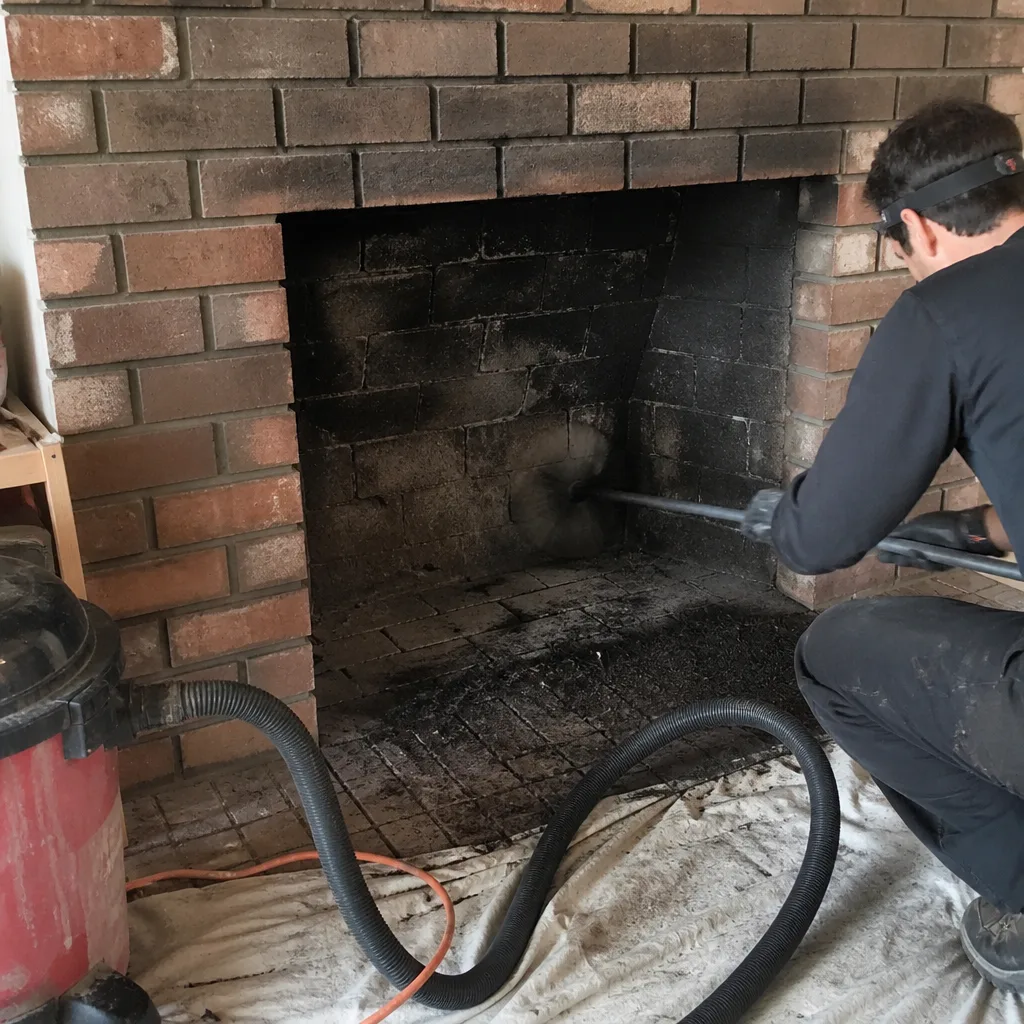 Before
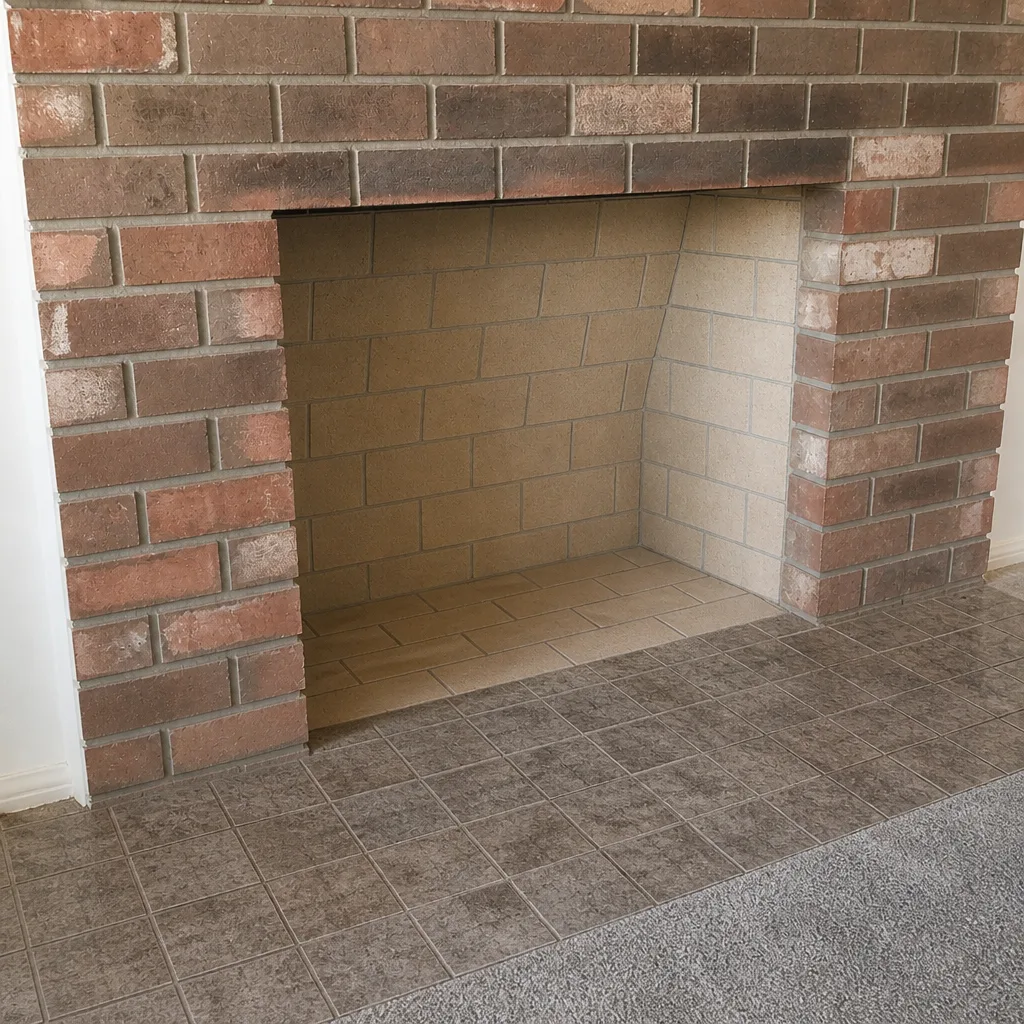 After
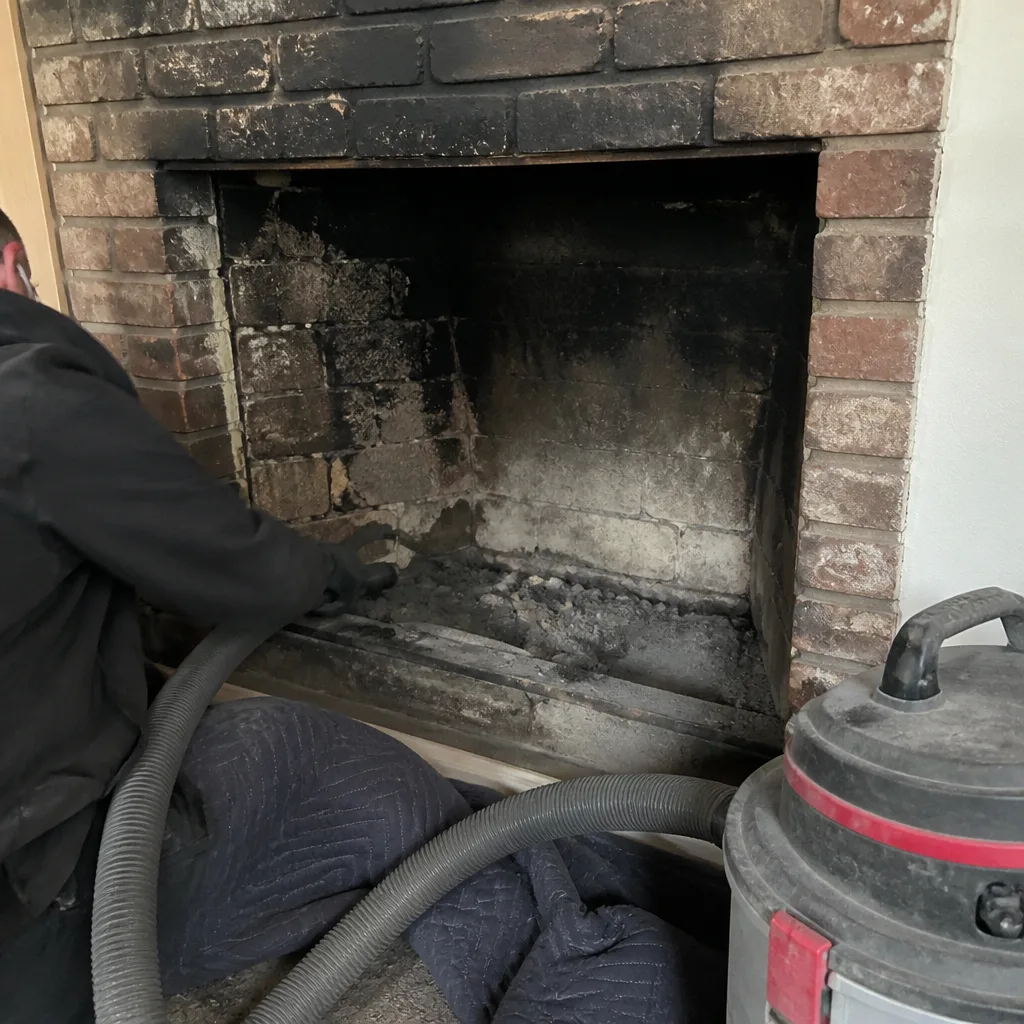 Before
 After
 Before
 After
When to Call a Professional
Some chimney issues are routine and some aren’t, and the dividing line is usually about combustion safety. Call a professional if you’ve never had the chimney inspected, if it’s been more than a year of regular burning, if you smell smoke in the room when the fire is lit, if you notice soot staining around the firebox or on the mantel, if the fire struggles to draw, or if the crown or cap looks damaged from the ground. Call immediately if you’ve had a chimney fire – even a small one – because the flue needs a Level 2 inspection before it’s used again. A blocked or damaged flue can push carbon monoxide into the living space, and that’s a hazard you want documented rather than assumed.
Renton Chimney Sweep Pros offers free estimates in Renton – call (877) 792-7176. We answer 24/7. Fast dispatch from 7am to 7pm, Sunday through Friday, closed Saturday. A call outside dispatch hours is booked into the next opening, Sunday through Friday, 7am to 7pm.
Frequently Asked Questions
A routine sweep and Level 1 inspection in the Renton area typically falls in a modest range, and the exact price is set per job by the written estimate. The written estimate sets the final price, and we give it to you before any work begins. Call (877) 792-7176 for an exact quote – estimates are free.
Only if the inspection shows the existing liner has failed. A cracked or deteriorated flue liner is the one chimney problem that can’t safely wait, because it’s what keeps combustion gases and heat inside the flue. But you shouldn’t take that on faith: ask to see the camera footage or photos, and if the evidence doesn’t support it, don’t do it. Sometimes a deteriorating flue can be restored with HeatShield ceramic resurfacing rather than fully relined – the right answer depends on the liner type and the extent of the damage. Call (877) 792-7176 to get an inspection with photo documentation you can evaluate yourself.
Inspect annually and sweep when creosote accumulation warrants it – for regular wood burners, that’s usually once a year. The annual inspection is the constant; the sweep frequency follows how much you burn. Skipping the annual check is how small issues become structural ones. Call (877) 792-7176 to book a sweep before burning season.
Creosote builds up inside the flue, and creosote is what fuels a chimney fire – that’s the risk people know about. The one they often don’t is that an unmaintained flue can also lose its ability to vent properly, which can mean smoke backing into the house and carbon monoxide where it shouldn’t be. Neither outcome is inevitable, but both are preventable with a sweep and an inspection. Call (877) 792-7176 and get the chimney checked before you light the first fire of the season.
You can, but you’re hiring someone whose chimney work is a sideline. The trade has its own certifications, its own inspection standards, and its own failure modes, and a generalist is unlikely to hold CSIA certification or carry the professional-grade liner and venting components a real repair needs. Call (877) 792-7176 to talk to a chimney specialist instead.
No. The state contractor registration confirms the business is registered, bonded, and insured, which is a necessary floor, but it says nothing about chimney-specific competence. Verify the state registration and the CSIA certification separately, and ask for proof of insurance. Call (877) 792-7176 if you’d like to know what our inspection includes before you book.
The Bottom Line
Hiring a chimney contractor in Renton is a vetting process, and the vetting happens before anyone climbs onto your roof. Verify CSIA certification and, when appliances are involved, NFI. Check the state contractor registration and the insurance as a separate layer, not a substitute. Ask the five questions, insist on a written report with photos, and compare written quotes on scope rather than on the bottom line. A specialist will show you the evidence behind every recommendation and tell you plainly when work can wait. A generalist with a brush kit won’t. That difference, not the price, is what you’re actually shopping for – and it’s the reason one call to a chimney specialist usually costs less than two calls to a cheap one.
Call (877) 792-7176 for a free estimate. We answer 24/7. Fast dispatch from 7am to 7pm, Sunday through Friday, closed Saturday. A call outside dispatch hours is booked into the next opening, Sunday through Friday, 7am to 7pm.
Written by the team at Renton Chimney Sweep Pros.